


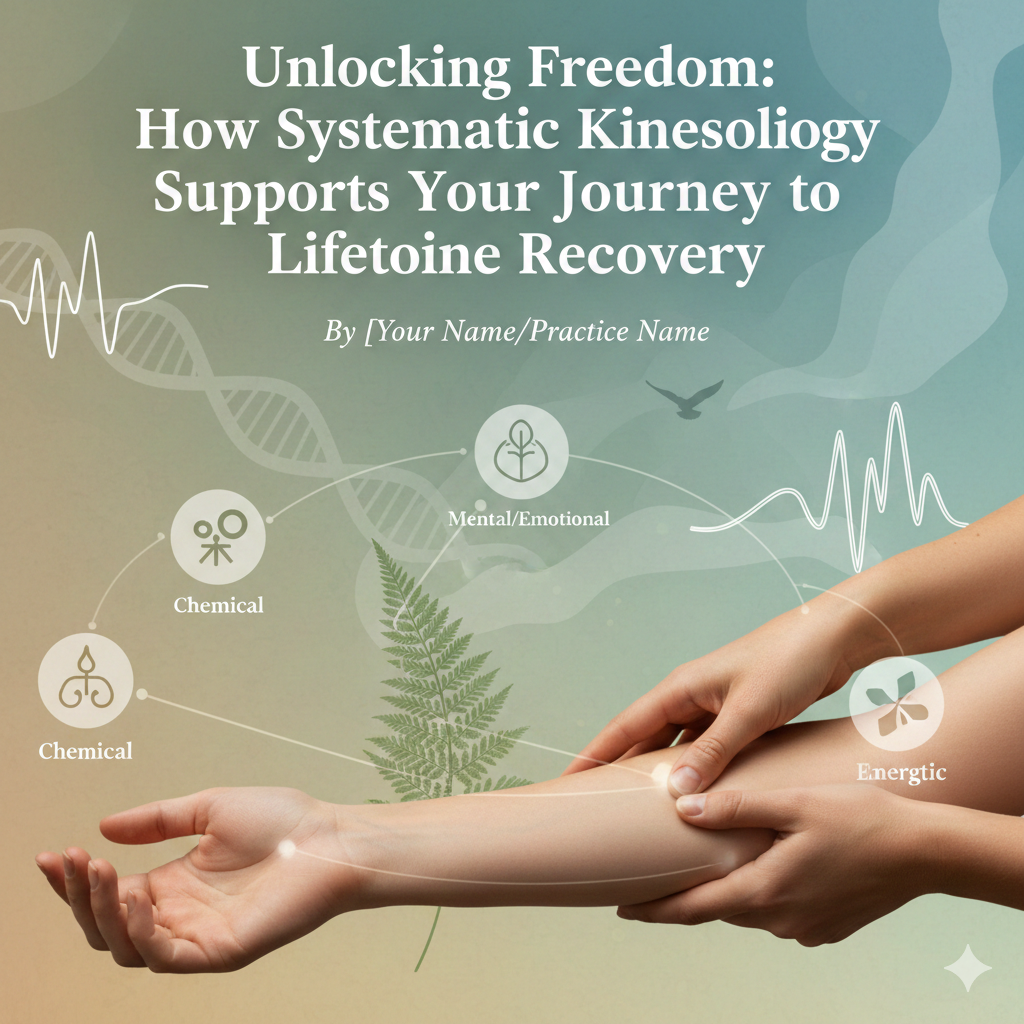
07 Feb Unlocking Freedom: How Systematic Kinesiology Supports Your Journey to Lifelong Recovery
Addiction is a complex journey, often leaving individuals feeling overwhelmed and disconnected from their innate ability to heal. While traditional approaches offer crucial support, many are seeking complementary therapies that address the deeper, underlying imbalances contributing to addictive patterns. This is where Systematic Kinesiology offers a powerful and unique approach, helping you to moderate behaviors and achieve the profound goal of lifelong recovery.
As a holistic health practitioner, I’ve seen firsthand how Systematic Kinesiology can be a transformative tool in navigating the challenges of addiction. It’s not about replacing existing support but enhancing it, providing a pathway to understanding and rebalancing your body’s intricate systems.
What is Systematic Kinesiology?
At its heart, Systematic Kinesiology is a gentle yet profound diagnostic and therapeutic system that uses muscle testing to identify imbalances in the body. It operates on the principle that the body holds incredible wisdom, and muscle responses can act as a natural biofeedback mechanism, revealing stressors across various dimensions:
- Chemical: Nutritional deficiencies, sensitivities, or toxic overload.
- Mental/Emotional: Unresolved trauma, stress, anxiety, or limiting beliefs.
- Structural: Postural issues, physical tension, or energetic blockages.
- Energetic: Imbalances in meridians or vital energy flow.
By identifying these root causes, we can then apply targeted, natural techniques to restore balance.
How Kinesiology Addresses Addiction from a Holistic Perspective
Addiction is rarely just a physical dependence; it often stems from a complex interplay of emotional pain, stress, nutritional deficiencies, and energetic disruptions. Systematic Kinesiology helps in several key ways:
- Identifying Stressors and Triggers: Muscle testing can pinpoint specific emotional, environmental, or nutritional stressors that trigger cravings or addictive behaviors. This awareness is incredibly empowering, as it allows for proactive management rather than reactive struggle. We can identify hidden food sensitivities that impact mood, or uncover suppressed emotions contributing to self-medication.
- Releasing Emotional Trauma and Stress: Many addictive patterns are coping mechanisms for past trauma, anxiety, or deep-seated emotional pain. Kinesiology offers gentle techniques to release stored emotional stress and trauma, often without the need to endlessly rehash painful memories. By clearing these energetic blockages, individuals can find a greater sense of peace and resilience.
- Restoring Nutritional Balance: Addiction often depletes the body of vital nutrients, impacting mood, energy, and cognitive function. Kinesiology can identify specific vitamin, mineral, or amino acid deficiencies, as well as food sensitivities, that might be contributing to cravings or emotional instability. By addressing these, we can support the body’s natural healing capacity and reduce the physical drivers of addiction.
- Enhancing Self-Awareness and Empowerment: Through the process of muscle testing, individuals gain a deeper understanding of their own body’s signals and needs. This heightened self-awareness is crucial for long-term recovery, fostering a sense of control and personal agency. It helps individuals connect with their inner strength and make conscious choices that support their well-being.
- Breaking Destructive Cycles and Habits: Kinesiology can help to reprogram subconscious patterns and beliefs that perpetuate addictive behaviors. By addressing the energetic and emotional underpinnings, it becomes easier to shift away from old habits and embrace new, healthier coping mechanisms.
- Supporting Moderation and Relapse Prevention: For those aiming for moderation, Kinesiology helps identify the specific triggers and imbalances that lead to overconsumption, allowing for targeted strategies to maintain balance. For those pursuing lifelong recovery, it provides ongoing support to fortify their emotional resilience, manage stress, and prevent relapse by addressing early warning signs at a holistic level.
Your Path to Lasting Freedom
Embracing Systematic Kinesiology means taking a proactive step towards understanding your unique journey and harnessing your body’s inherent capacity to heal. It’s about building a strong foundation of physical, emotional, and energetic well-being, paving the way for sustained recovery and a life lived with greater freedom and joy.
If you’re ready to explore a complementary path that supports your journey towards moderation or lifelong recovery, I invite you to learn more about how Systematic Kinesiology can empower you.